
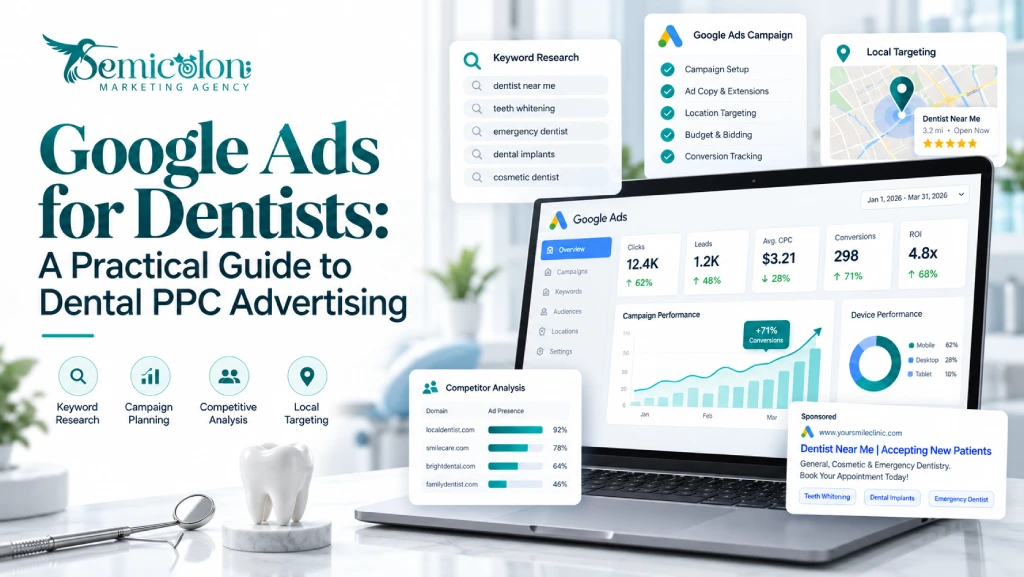
Google Ads for dentists helps dental clinics reach people who are actively searching for dental care. Patients may be looking for emergency dentistry, dental implants, Invisalign, teeth whitening, or a dentist near them.
A well-planned campaign can connect your clinic with these high-intent searches and turn relevant clicks into calls and appointment requests. In this guide, you’ll learn how Google Ads works for dentists, what it costs, which strategies can improve performance, and how a real dental PPC campaign was structured.
Do Google Ads Work for Dentists?
Yes. Google Ads can help dentists reach people who are already searching for dental treatments or a nearby clinic. Results depend on factors such as location, competition, keywords, budget, landing page quality, and conversion tracking. A well-managed campaign can generate calls and appointment enquiries from high-intent searches.
Why Should Dentists Use Google Ads?
Google Ads helps dentists reach potential patients when they are actively searching for dental services. It also lets clinics target specific locations, promote individual treatments, control their budget, and track results.
This makes Google Ads for dental clinics different from many traditional advertising methods. Instead of showing an ad to a broad audience, you can focus on people who already show interest in dental care.
For example, someone searching for “emergency dentist near me” has a clear and immediate need. A person searching for “dental implants in Vancouver” is also much closer to choosing a clinic than someone who simply sees a general dental ad.
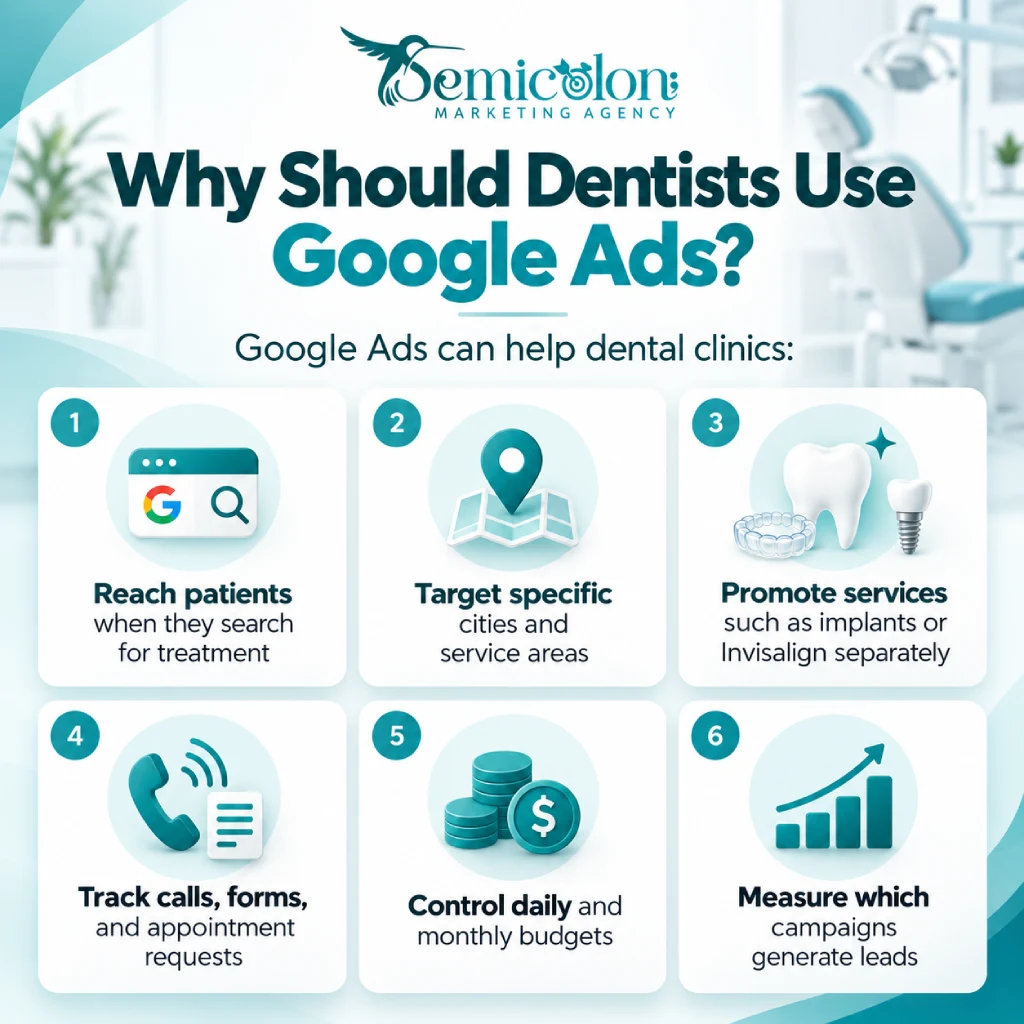
Google Ads can help dental clinics:
- Reach patients when they search for treatment
- Target specific cities and service areas
- Promote services such as implants or Invisalign separately
- Track calls, forms, and appointment requests
- Control daily and monthly budgets
- Measure which campaigns generate leads
Different searches also need different messages. Someone with a dental emergency should not see the same ad and landing page as someone researching cosmetic dentistry.
What Google Ads Strategies Work for Dentists?
The right strategy depends on the treatment, patient intent, location, and campaign goal. Search Ads often work well for high-intent searches, while Display and Video can support awareness and education.
| Google Ads Strategy | Best Use for Dental Clinics | Main Goal |
| Search Ads | Emergency dentistry, implants, Invisalign, general dentistry | Reach high-intent patients |
| Display Ads | Brand awareness and eligible audience strategies | Increase visibility |
| Video Ads | Patient education and treatment awareness | Build trust |
| Local and Maps-focused campaigns | Local patient acquisition | Generate nearby calls and visits |
| Performance Max | Multi-channel campaigns with enough conversion data | Expand reach across Google |
Search Ads
Search Ads help clinics appear when people search for dental services. Common searches include:
- dentist near me
- emergency dentist near me
- dental implants near me
- Invisalign dentist near me
- dentist in [city]
The right match type depends on the campaign, available conversion data, budget, and bidding strategy.
Dental Implant Ads
Dental implant ads need a focused strategy because patients often compare several providers before choosing a clinic. The ad should lead to a page specifically about dental implants instead of a general homepage.
The page should clearly explain the treatment, who may qualify, the process, payment or financing options where relevant, and the next step. A good ad can generate a click. The landing page needs to turn that click into an enquiry.
Display Ads and Audience Targeting
Display Ads can help a dental clinic increase brand awareness and stay visible across Google’s network.
However, dental clinics need to follow Google’s healthcare advertising rules carefully. Google treats health information as a sensitive-interest category and restricts some types of personalized targeting.
Before using audience-based campaigns, clinics should review the latest Google Ads healthcare and personalized advertising policies.
Video Ads
Video Ads can answer common patient questions and help people become familiar with the dentist before booking.
[VIDEO SECTION]
A useful short video could answer:
Does getting a dental implant hurt?
A dentist can briefly explain what patients can normally expect during and after treatment. The video can then encourage viewers to speak with a dentist about their individual case.
Dental clinics should also follow Google’s healthcare and personalized advertising policies when using audience targeting.
Google Ads Personalized Advertising Policy
What Are the Best Google Ads Keywords for Dentists?
The best Google Ads keywords for dentists usually combine strong treatment intent with local intent. Instead of targeting broad dental terms, clinics should focus on searches that suggest someone is actively looking for a dentist or a specific treatment.
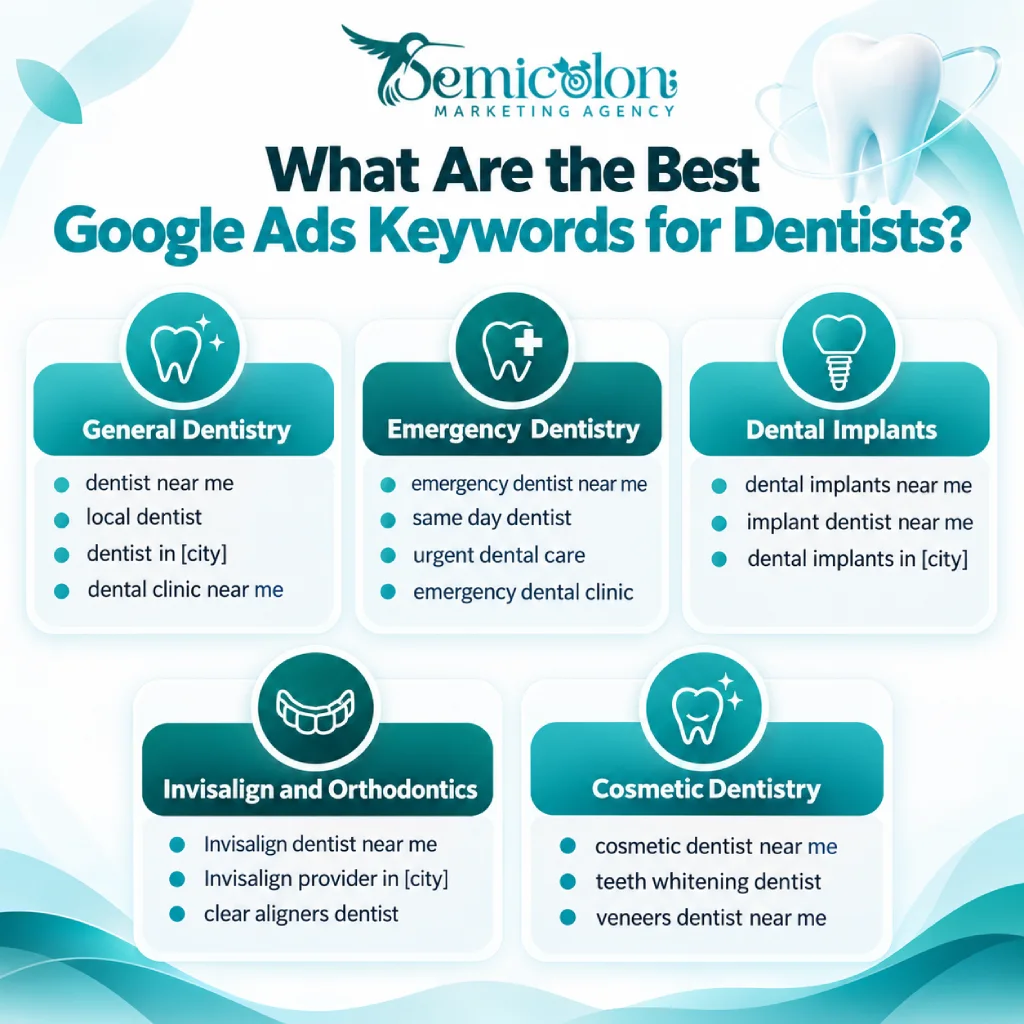
Useful keyword groups can include:
General Dentistry
- dentist near me
- local dentist
- dentist in [city]
- dental clinic near me
Emergency Dentistry
- emergency dentist near me
- same day dentist
- urgent dental care
- emergency dental clinic
Dental Implants
- dental implants near me
- implant dentist near me
- dental implants in [city]
Invisalign and Orthodontics
- Invisalign dentist near me
- Invisalign provider in [city]
- clear aligners dentist
Cosmetic Dentistry
- cosmetic dentist near me
- teeth whitening dentist
- veneers dentist near me
Keyword selection should be based on patient intent, not search volume alone. A keyword with fewer searches but stronger treatment and local intent may generate better leads than a broad keyword with much higher traffic.
Clinics should also review the Search Terms Report regularly and add negative keywords to prevent irrelevant searches from using the campaign budget.
How Much Do Google Ads Cost for Dental Clinics?
There is no fixed cost for Google Ads for dentist campaigns. The final cost depends on the location, competition, services, keywords, bidding strategy, landing page, and campaign quality.
As an industry reference, 2025 benchmark data for Dentist & Dental Services reported an average CPC of about $7.85, an average conversion rate of 9.08%, and an average cost per lead of about $83.93. These are benchmarks, not guaranteed costs.
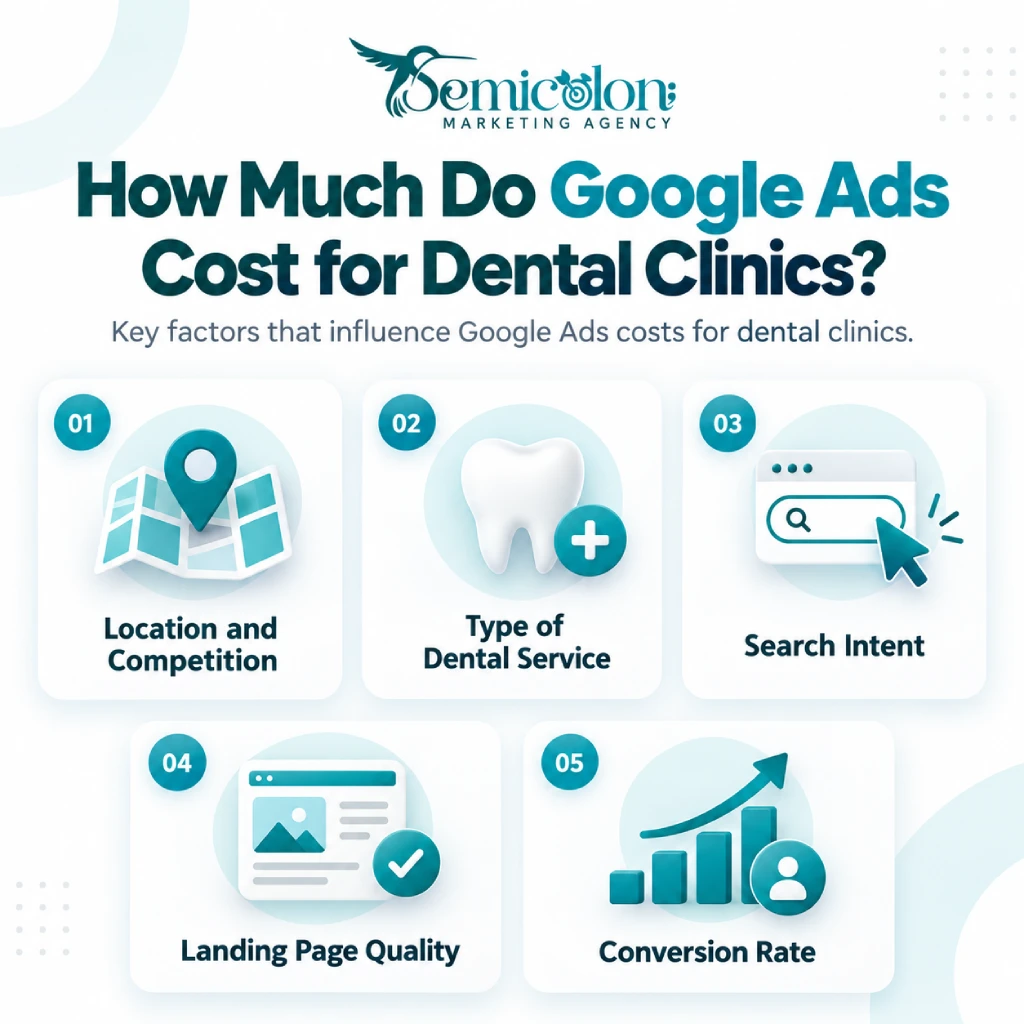
Several factors can increase or reduce the cost.
- Location and Competition
- Type of Dental Service
- Search Intent
- Landing Page Quality
- Conversion Rate
How Much Should a Dentist Spend on Google Ads?
There is no single Google Ads budget that works for every dental clinic. The right budget depends on your location, competition, services, average cost per click, conversion rate, and how many new patient enquiries you want to generate.
Higher-value or highly competitive treatments such as dental implants may require a different budget from general dentistry or emergency campaigns. Instead of choosing a budget based only on what competitors appear to spend, start with your campaign goals and expected cost per lead.
Your budget should also be large enough to collect useful data. If a campaign receives too few clicks or conversions, it can be difficult to identify which keywords, ads, and landing pages are actually performing.
As performance data becomes available, budget can be shifted toward campaigns and services that generate more qualified patient enquiries.
How Can Dentists Optimize Google Ads?
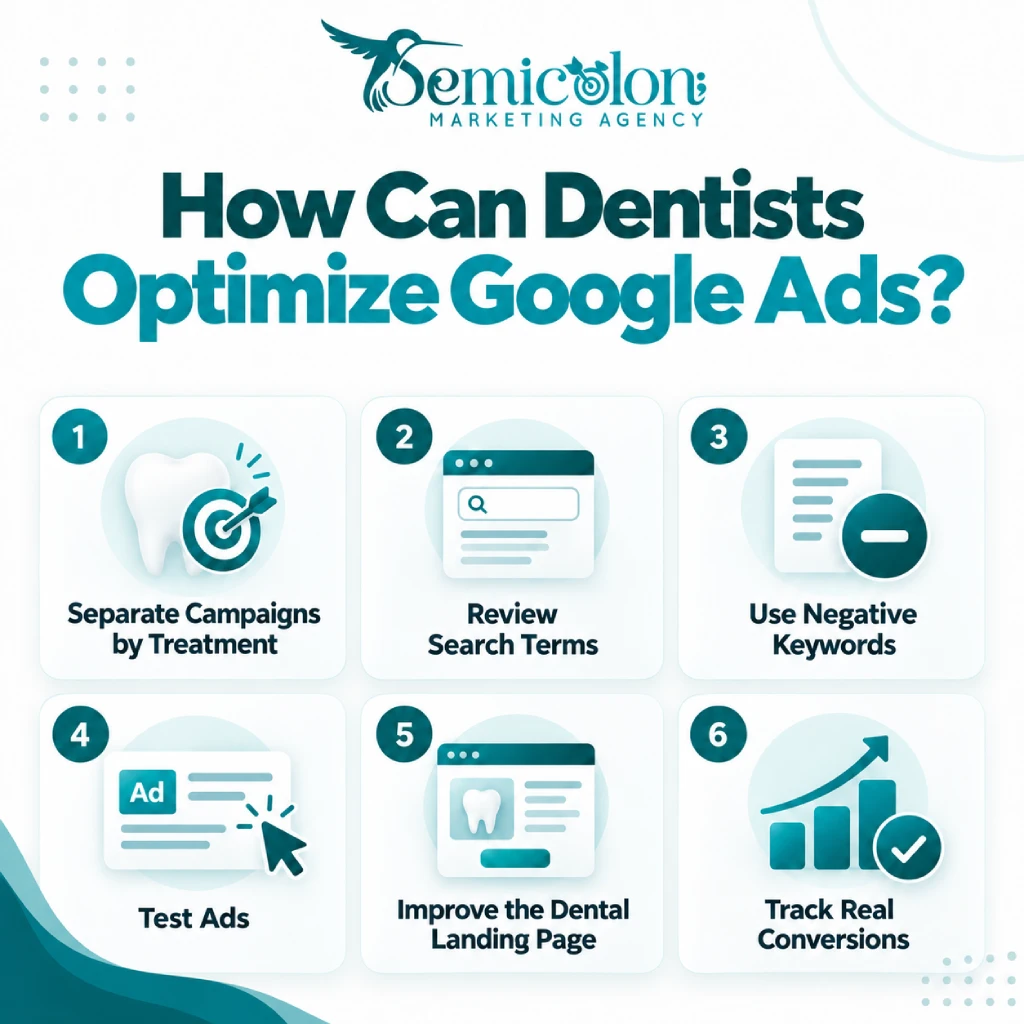
Dentists can improve Google Ads by separating campaigns by service, reviewing search terms, using negative keywords, testing ads, improving landing pages, and tracking real conversions. Optimization should focus on getting better leads, not simply more clicks.
-
Separate Campaigns by Treatment
Emergency dentistry, Invisalign, implants, and general dentistry have different patient needs. Separate campaigns make it easier to control keywords, budgets, ads, and landing pages.
-
Review Search Terms
The Search Terms Report can show whether people reached the campaign through useful or irrelevant searches. For example, a clinic looking for implant patients may find searches related to dental education, jobs, or unrelated products. These searches can waste budget.
-
Use Negative Keywords
Negative keywords help prevent ads from appearing for irrelevant searches. Review them regularly instead of creating one list when the campaign launches.
-
Test Ads
Test different headlines, descriptions, benefits, and calls to action. Do not change everything at once.
-
Improve the Dental Landing Page
The landing page dentist campaigns use have a major effect on conversion rates.
The page should load quickly, work well on mobile, explain the service clearly, and make the next step easy to find.
-
Track Real Conversions
Do not judge an ads dentist campaign only by clicks. Track actions that matter to the clinic, such as phone calls, appointment requests, and completed forms.
Google Ads Search Terms Report Guide recommends reviewing search terms to understand which searches trigger your ads and to identify irrelevant traffic.
How to Check Google Ads Competitors in Dentist Marketing
Dentists can check Google Ads competitors with Auction Insights, local Google searches, and tools like Semrush or SpyFu. Auction Insights shows which advertisers compete in the same auctions and how their visibility compares with yours. When checking competitors, focus on:
- Dental services they advertise
- Locations they target
- Offers and benefits
- Calls to action
- Landing pages
- Consultation or financing offers
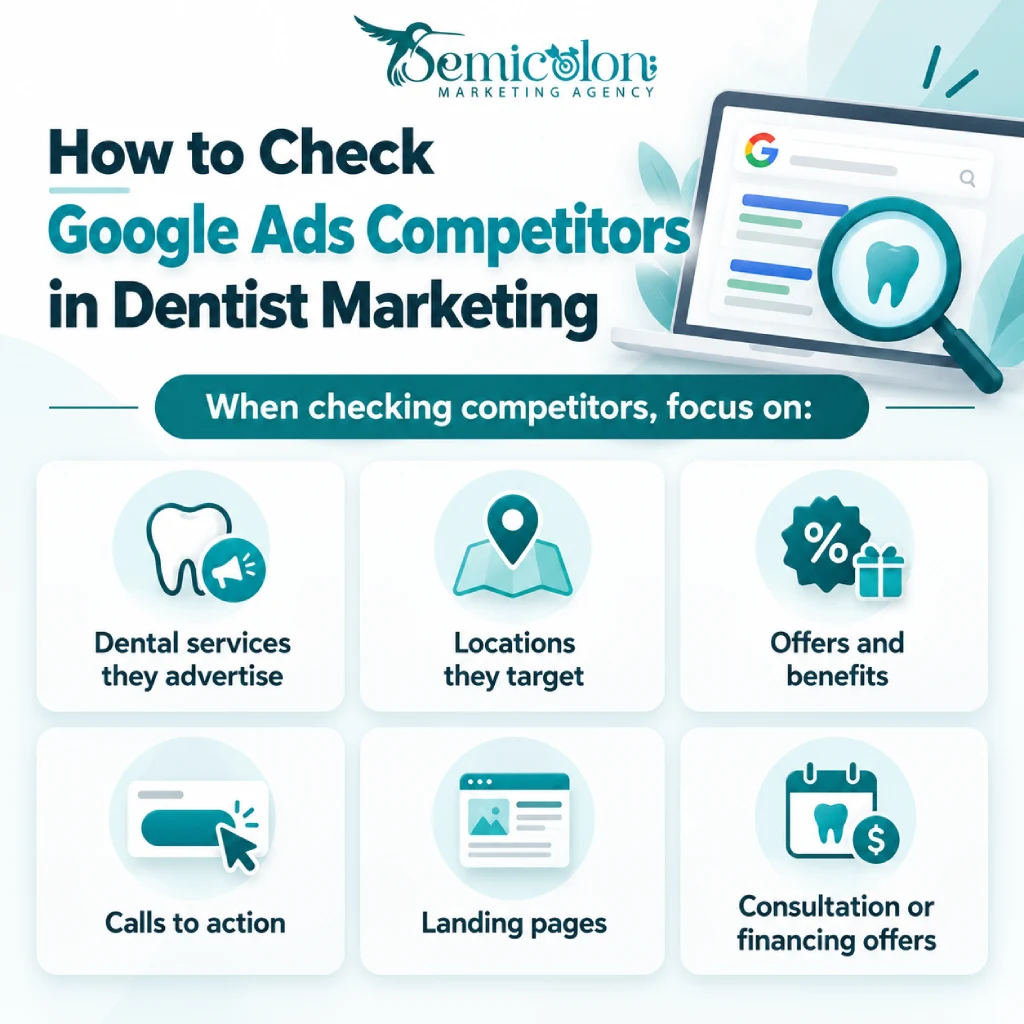
Do not simply copy competitors. Use this information to find gaps and improve your own dental Google Ads campaigns.
Dental Google Ads Case Study: Hemlock Dental Clinic
A real campaign helps show how dental PPC advertising can work in practice.
Semicolon worked with Hemlock Dental Clinic in Vancouver to increase calls and patient enquiries through Google Ads. The campaign focused on high-intent searches such as:
- dental clinic near me
- dentist same day
- emergency dental clinic near me
The strategy also included ad copy testing, landing page improvements, bidding optimization, and negative keyword filtering.
How Do You Choose a Dental Google Ads Agency?
A good dental google ads agency should understand dental marketing, conversion tracking, landing pages, local search intent, and patient acquisition. Clinics should also look for relevant experience, transparent reporting, and real case studies.
Start by checking whether the agency has experience with dental clinics. A general PPC advertising agency may understand Google Ads, but dental marketing also requires an understanding of local patient intent and different dental services.
Next, look at how the agency measures performance. Ask what counts as a conversion and whether the agency tracks calls, forms, qualified leads, and other useful actions.
Landing page experience also matters. An agency should understand that sending every paid visitor to the homepage is not always the best approach.
Reporting should be simple and transparent. A clinic should understand:
- How much it spent
- How many leads the campaigns generated
- Which services performed well
- What changed during the month
- What the agency plans to test next
The best digital marketing agency for a dental clinic is not simply the one promising the cheapest clicks. Look at its experience, strategy, reporting, tracking, landing page knowledge, and ability to connect advertising spend with patient enquiries.
Why Work With Semicolon for Dental PPC Advertising?
Semicolon combines Google Ads, landing page optimization, SEO, analytics, and conversion tracking to improve dental PPC campaigns. We manage keywords, ad copy, targeting, tracking, and ongoing optimization. Our experience includes the Hemlock Dental Clinic campaign, which generated more than 45 qualified leads per month with a CAD 4,000 monthly ad budget. Conact ue for more details.
FAQs
Do Google Ads work for dentists?
Yes. Google Ads can help dentists reach people who are actively searching for treatments or a local dental clinic. Results depend on your location, competition, keywords, landing page, and campaign setup.
How much do Google Ads cost for dentists?
There is no fixed cost. Actual costs vary by location, treatment, competition, and campaign quality.
What are the best Google Ads keywords for dentists?
The best keywords usually have clear local and treatment intent, such as “dentist near me,” “emergency dentist near me,” and “dental implants near me.”
Should dentists use separate Google Ads campaigns for each service?
Yes, separating services can make campaigns easier to manage and optimize. For example, dental implants, emergency dentistry, Invisalign, and general dentistry have different patient needs, keywords, and landing pages.
How can dentists improve Google Ads results?
Focus on relevant keywords, negative keywords, strong ad copy, service-specific landing pages, and accurate conversion tracking.


