
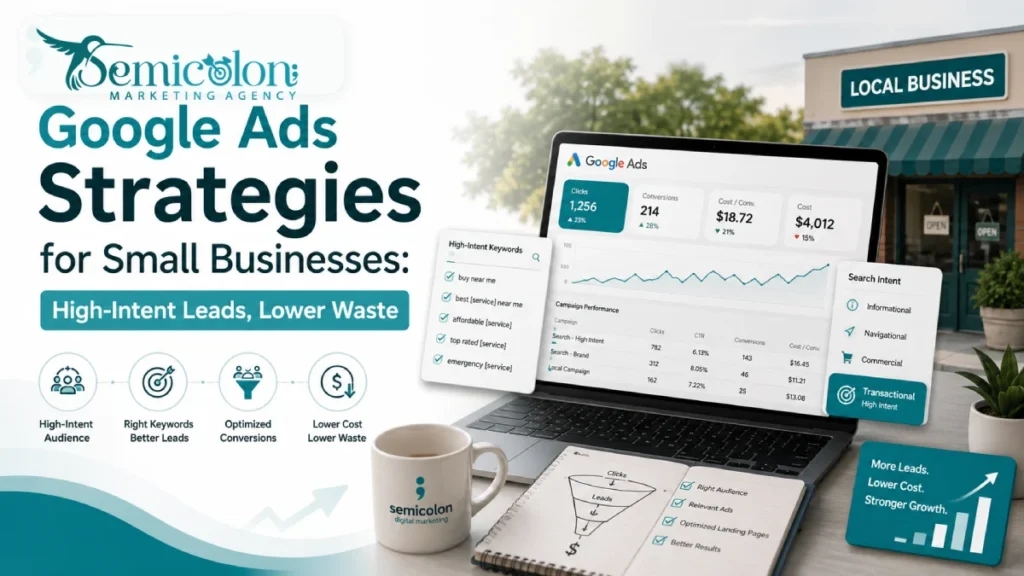
Many small businesses invest in Google Ads expecting to generate leads quickly, but poorly structured campaigns often waste their budget before generating a single qualified customer. A focused strategy built around high-intent keywords, local targeting, and clear conversion goals can produce better results with less ad spend.
A more effective approach is to build simple campaigns around one service, one location, and one measurable conversion goal. This structure makes campaigns easier to optimize while reducing wasted spend.
In this guide, you’ll learn how to build a low-risk Google Ads strategy, choose the right keywords, structure campaigns effectively, and improve lead quality without increasing your budget.
The Most Effective Google Ads Strategy
The best Google Ads strategy for small businesses is to focus on high-intent keywords, target a specific service area, create one campaign for each service, use dedicated landing pages, and track conversions accurately. This approach reduces wasted ad spend and improves lead quality, especially for businesses with limited budgets.
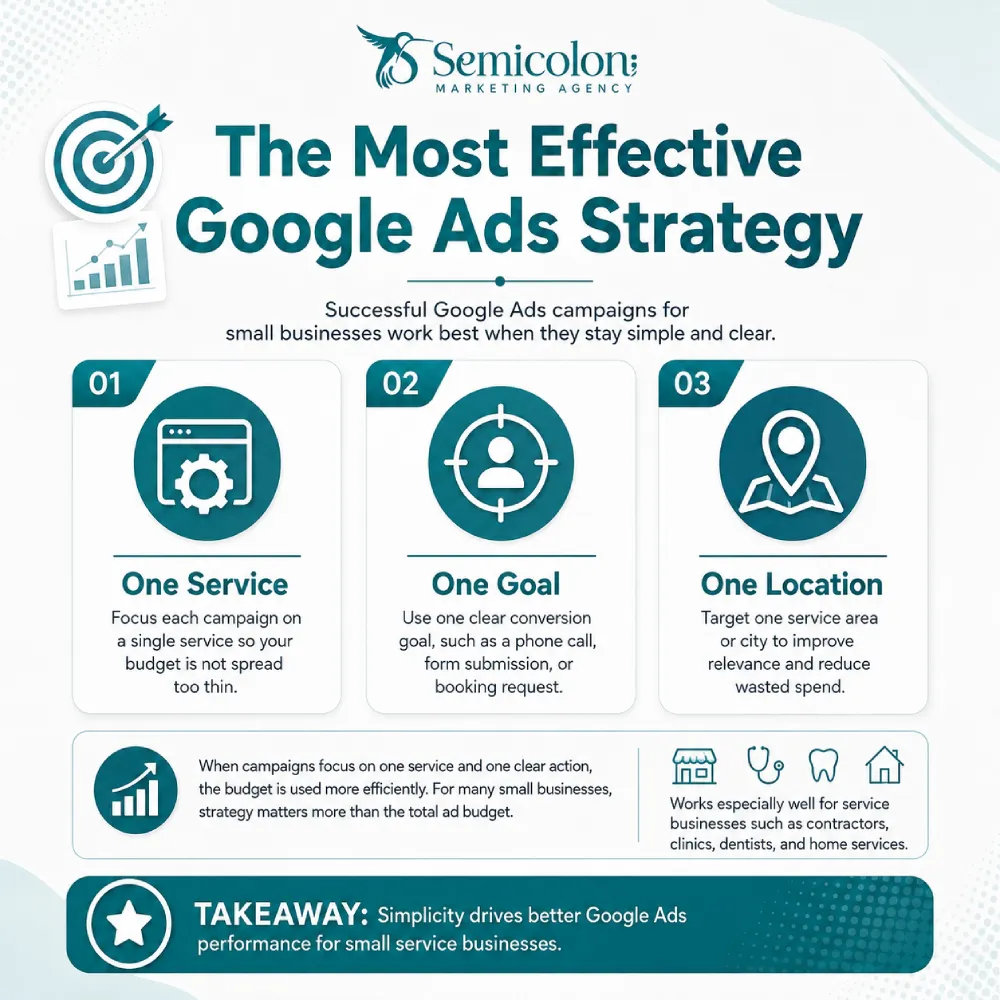
Successful Google Ads campaigns for small businesses focus on simplicity and clarity. The most effective Google Ads strategy for small businesses usually follows three rules:
- One service
- One goal
- One location
When campaigns focus on a single service and a clear conversion action, the budget is used more efficiently. For many companies, strategy matters far more than the total advertising budget.
This approach works particularly well for Google Ads for service businesses such as contractors, clinics, dentists, and home services.
Why Should Small Businesses Consider a Unique Google Ads Strategy?
Small businesses face very different challenges than large companies. Limited budgets, fewer staff, and stronger competition mean that every click needs to have a higher chance of turning into a customer. There are some reasons why Google ad strategy for small businesses is suitable:
Limited Budget & Low Error Tolerance
Most small businesses cannot afford to waste advertising spend. A few poorly targeted keywords or irrelevant clicks can consume a significant portion of a monthly marketing budget. That’s why campaign structure, keyword selection, and conversion tracking are often more important than increasing the advertising budget.
A safe strategy should focus on:
- high-intent keywords
- narrow geographic targeting
- a small number of campaigns
- measurable conversion goals
This structure reduces risk and helps campaigns generate leads faster.
Why Big Brand Strategies Fail for Small Businesses?
Large brands often advertise across multiple locations, promote dozens of products, and invest heavily in broad keyword targeting. While this approach can increase visibility, it usually requires substantial budgets and continuous optimization. Most small businesses don’t have the budget to compete on broad searches. Trying to advertise every service in every location often spreads the budget too thin, making it harder to generate qualified leads.
Instead, the best Google ads strategy for small businesses focuses on:
- local searches
- service-specific keywords
- direct lead generation
What Makes a Google Ads Strategy Low Risk for Small Businesses?
A low-risk Google Ads strategy helps small businesses reduce wasted spend while improving lead quality. The goal isn’t to reach the largest audienceو it’s to reach the right audience at the right time.
High-Intent Keywords Only
High-intent keywords are the foundation of successful search campaigns because they attract users who are ready to contact a business, request a quote, or book a service.
Examples include searches like:
- emergency plumber near me
- dentist appointment Vancouver
- roofing repair quote
These searches usually come from people who are looking for help.
Local & Service-Focused Targeting
Local targeting ensures your ads appear only in the areas where you actually provide services. This prevents unnecessary clicks from users outside your service area and helps your budget reach more qualified prospects.
- google ads for small businesses Vancouver
- google ads for contractors Vancouver
- google ads for dentists Vancouver
- google ads for clinics Vancouver
- google ads for local businesses Vancouver
- google ads for home services Vancouver
Local targeting attracts nearby customers who are more likely to convert.
Simplicity Over Scale
Complex campaign structures often waste budget. A simple structure works better for Google Ads for small businesses:
- one campaign per service
- small keyword groups
- one main conversion goal
This makes optimization much easier.
Keyword Strategy for Small Businesses
Choosing the right keywords has a direct impact on campaign performance. Instead of targeting every related search, focus on keywords that indicate strong buying intent and match the services you actually offer.
Transactional & Problem-Based Keywords
Transactional keywords are searches made by people who are ready to take action. These users are typically looking to book an appointment, request a quote, or solve an immediate problem, making them much more likely to convert.
Examples include:
- repair services
- emergency services
- quote requests
- appointment bookings
Keywords that include words like “near me,” “quote,” “repair,” “emergency,” or “book now” often signal stronger purchase intent than informational searches.
What Keywords Small Businesses Should Avoid
Many small businesses accidentally target informational keywords that rarely convert. Examples include:
- how to fix plumbing
- dental cleaning tips
- roofing materials guide
These searches generate traffic but not customers.
Role of Negative Keywords
Negative keywords tell Google when not to display your ads. By excluding irrelevant searches, you can improve lead quality, reduce wasted clicks, and make better use of your advertising budget.
Examples include:
- free
- jobs
- training
- DIY
Adding negative keywords helps improve campaign efficiency and protects the budget for Google Ads for small businesses.
What Campaign Structure Works Best for Small Businesses?
A well-organized campaign structure makes optimization easier and prevents your advertising budget from being spread across too many services. For most local businesses, a simple campaign structure consistently performs better than a complex one.
One Campaign per Service
Create a separate campaign for each core service your business offers. This allows you to write more relevant ads, build dedicated landing pages, and measure performance more accurately. Examples include:
- roof repair
- emergency dental care
- plumbing installation
For example, a dental clinic should create separate campaigns for emergency care, teeth whitening, dental implants, and Invisalign instead of combining them into one campaign.
One Goal per Campaign (Call or Form)
Campaigns should focus on one main conversion goal such as:
- phone calls
- quote requests
- appointment bookings
This clarity helps measure whether Google ads for small business campaigns are profitable.
Tight Location Targeting
Restrict your targeting to the cities, neighborhoods, or service areas where you actually do business. Showing ads outside your service area often increases costs without generating qualified leads. Businesses should target:
- specific cities
- service areas
- radius around the business location
Local targeting is essential for businesses running Google ads for local businesses Vancouver.
Example Campaign Structure
Campaign:
Emergency Plumbing
↓
Ad Group:
Emergency Pipe Repair
↓
Keywords:
emergency plumber near me
24 hour plumber
pipe burst repair
↓
Landing Page:
Emergency Plumbing Service
↓
Goal:
Phone Calls
How Should Small Businesses Manage Their Google Ads Budget?
When launching a new Google Ads campaign, start with a budget that allows you to collect reliable performance data without spreading your investment across multiple services. Testing one campaign first usually produces clearer insights than launching several campaigns at the same time. The goal of the first phase is to collect data and identify which keywords generate leads.
Daily Budget Control
Google Ads uses an average daily budget rather than a strict daily spending limit. On high-opportunity days, Google may spend more than your average daily budget, while spending less on other days to balance costs over the month. Best practices include:
- monitoring cost per lead
- pausing low-performing keywords
- increasing bids on profitable searches
When to Increase Budget Safely
Increase your advertising budget only after your campaign consistently generates qualified leads at an acceptable cost. Scaling too early often increases spending before the campaign has been fully optimized. Signs that scaling may be safe include:
- consistent lead flow
- stable conversion rates
- profitable cost per acquisition
Landing Page Strategy (Where Small Businesses Lose Money)
To answer the question of do google ads work for small business, we sould answer some questions:
Why Sending Traffic to Homepage Fails
Sending paid traffic to a homepage often reduces conversions because visitors must search for the information they need. A dedicated landing page keeps users focused on one service and one action.
This often reduces conversions because visitors must search for the relevant service.
Simple High-Converting Landing Pages
An effective landing page should answer the visitor’s question immediately and make it easy to take the next step. Every element on the page should support a single conversion goal.
- a clear service headline
- a short service explanation
- a strong call-to-action
- a visible phone number or contact form
Simple pages often convert better than complex websites.
Trust Signals That Matter for Local Businesses
Trust plays a huge role in conversion rates. Effective trust signals include:
- customer reviews
- certifications or licenses
- before-and-after photos
- local business address
These elements help potential customers feel confident about contacting the business.
Bidding & Optimization Strategy
There are some strategies:
Manual vs Smart Bidding for Small Budgets
The best bidding strategy depends on your campaign goals and the amount of conversion data available. Manual CPC can provide greater control during early testing, while Smart Bidding often performs better once the campaign has collected enough conversion data.
Which Bidding Strategy Should You Use?
- Manual CPC: Best for new campaigns with little or no conversion history.
- Maximize Conversions: Suitable once reliable conversion tracking is in place.
- Target CPA: Best for campaigns with consistent conversion volume and stable lead costs.
Learning Phase Expectations
Most campaigns enter a learning phase after launch. During this period:
- Performance may vary from day to day.
- Conversion volume may remain inconsistent.
- More data is needed before making major optimization decisions.
This stage is normal for Google Ads strategies for small businesses.
Optimization Timeline (First 30–60 Days)
The first two months are important for improving performance.
Optimization steps may include:
- adding negative keywords
- adjusting bids
- improving ad copy
- refining targeting
Over time, these adjustments create the best Google ads strategy for small businesses.
What Should Small Businesses Track in Google Ads?
Without accurate conversion tracking, it’s impossible to know whether your Google Ads campaigns are generating real business results. Every optimization decision should be based on reliable performance data rather than assumptions.
Call Tracking
Many service businesses generate leads through phone calls. Tracking calls allows businesses to see which ads produce real customers.
Form & Conversion Setup
Every important customer action should be measured so campaign performance reflects real business outcomes instead of basic engagement metrics.
- contact form submissions
- appointment bookings
- quote requests
Without proper tracking, it is impossible to evaluate campaign performance.
What Metrics Actually Matter
Instead of focusing only on clicks or impressions, businesses should track:
- cost per lead
- conversion rate
- qualified phone calls
- return on ad spend
What Are Some Common Google Ads Strategy Mistakes?
After understanding the best Google ads strategy for small businesses, we should know some mistakes:
Spreading Budget Too Thin
- Running many campaigns at once often divides the budget too much.
- Focusing on one main service usually produces better results.
Running Too Many Services at Once
Each service requires separate keywords, ads, and landing pages. Starting small keeps campaigns manageable.
Stopping Too Early
Some businesses stop campaigns before collecting enough data. Testing often requires several weeks before reliable insights appear.
When Does Google Ads Strategy Work for Small Businesses?
A successful Google Ads campaign consistently generates qualified leads at a sustainable cost. Monitoring performance over time helps determine whether your strategy is delivering measurable business results.
Signs the Strategy Is Working
Successful Google Ads for small business campaigns often show:
- consistent lead generation
- stable cost per lead
- increasing search visibility
Signs the Strategy Needs Adjustment
Campaigns may need improvement if:
- costs increase quickly
- leads are low quality
- conversion rates remain low
Adjusting keywords, landing pages, and targeting can often solve these problems.
When Should You Hire a Google Ads Agency?
Some businesses choose to work with the best digital marketing agency or a specialized ppc advertising agency to manage campaigns. Professional agencies often help with:
- keyword research
- campaign setup
- landing page optimization
- conversion tracking
- ongoing optimization
Not sure whether your campaigns are performing as they should? Request a Google Ads audit to identify wasted spend, tracking issues, and opportunities for improvement before increasing your advertising budget.
How Much Is a Google Ads Agency Price?
Google ads agency pricing usually depends on several factors:
- advertising budget
- campaign complexity
- number of locations or services
Some agencies charge a fixed monthly fee, while others charge a percentage of ad spend.
How Long Does It Take for Google Ads to Work?
A common question for new advertisers is how long does it take for Google Ads to work. In most cases:
- Early data appears within the first few weeks
- Meaningful optimization happens within 30 days
- Stable performance often develops after 60 days
With consistent optimization and the right Google Ads strategy for small businesses, campaigns can become a reliable source of leads and growth.
Conclusion
A successful Google Ads strategy isn’t about having the biggest budget—it’s about making smarter decisions. By focusing on high-intent keywords, simple campaign structures, dedicated landing pages, and accurate conversion tracking, small businesses can generate qualified leads while reducing wasted ad spend. Start with one service, measure every conversion, and improve your campaigns using real performance data rather than assumptions.
Best Google Ads Strategies with Semicolon Digital Marketing
Semicolon Digital Marketing is a result-focused digital marketing team that helps businesses grow through smarter online advertising. Instead of using complicated marketing tactics, the agency focuses on practical strategies that actually bring leads, calls, and customers. Get in touch with our experts today to elevate your Google Ads campaigns and drive business growth.
FAQs
Are Google Ads Effective for Small Businesses?
Yes, Google Ads are highly effective for small businesses when they use a focused, high-intent, and locally targeted strategy.
What is the best Google Ads strategy for a small business?
The best strategy is to keep campaigns simple by focusing on one specific service, one clear conversion goal, and strict local geographic targeting.
How long does it take for Google Ads to start working?
While initial data appears within a few weeks, reaching stable and profitable performance typically takes 30 to 60 days of consistent optimization.
Which keywords should small businesses avoid in their ads?
Small businesses should avoid broad informational keywords (like “how-to” guides) and focus exclusively on transactional, high-intent terms that drive immediate action.
Why should a small business hire a PPC advertising agency?
A specialized agency ensures your budget is protected through expert campaign setup, proper conversion tracking, and ongoing, data-driven adjustments that maximize ROI.


